

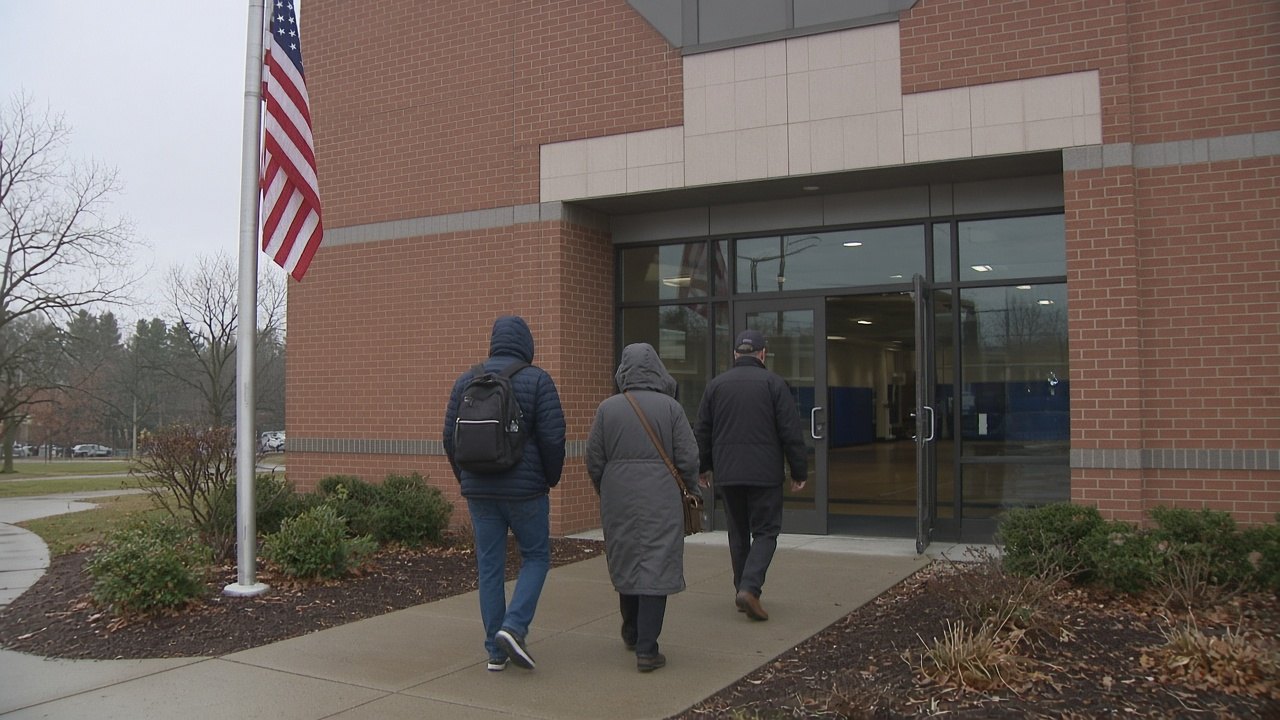
Legally, the answer is short: federal agents may not patrol polling places. But there’s a gap between “may not” and “won’t be anywhere nearby” — and that gap is where the fear lives.
Why it matters: Intimidation doesn’t require a single arrest. It only requires enough people believing one might happen.
The big picture
- A federal ban dating to the post-Civil War era bars “troops or armed men” at polling places. Legal experts say that covers ICE.
- Homeland Security Secretary Markwayne Mullin said ICE “isn’t there to patrol the polling places” — but left room for agents to appear over a threat or to serve a warrant.
- Florida’s most-discussed incident — a detention near an early-voting site in Key Largo — was found by officials to be unrelated to voting. The agents were CBP, not ICE.
- Advocates are preparing anyway: per NPR, they’re training observers, tracking agent activity and urging people to vote early.
What the law says
Per PolitiFact, federal bans on troops at the ballot box go back to after the Civil War. The law once carried an exception “to keep the peace at the polls,” but Congress struck it in 1909 — precisely out of fear any scuffle would become a pretext.
The statute refers to “any troops or armed men.” Campaign Legal Center attorney Jonathan Diaz told PolitiFact that this applies to any federal civilian law enforcement agency, ICE included.
What is allowed:
- The Justice Department sends monitors to check compliance with federal election law. On Oct. 28, in court in an NAACP lawsuit, DOJ said (per Bloomberg Law and The Hill) that neither FBI nor ICE personnel would serve as monitors. Staff from ATF, DEA and the Bureau of Prisons will — unarmed, with no police powers and no authority to interfere with voting.
- Local police operate under state rules.
Per Voting Rights Lab (via PolitiFact), California, Connecticut, New Mexico, New York, Oregon, Rhode Island and Virginia have passed laws limiting agents and troops near polling sites.

What DHS and the White House say
The administration’s line is, in effect, “no plans, but no promises.” Mullin told NBC News that “ICE isn’t there to patrol the polling places,” adding: “If we’re serving a warrant, we will be where we need to be.” AP reported on the eve of the election that DHS dismissed concerns about ICE at the polls as “fearmongering.”
At the same time, Trump and Mullin claim, without evidence, that more than 250,000 noncitizens are on voter rolls.
Between the lines: where the fear comes from
PolitiFact lists the triggers:
- Steve Bannon in February: “You’re damn right we are going to have ICE surround the polls come November.”
- White House press secretary Karoline Leavitt saying she “can’t guarantee that an ICE agent won’t be around a polling location.”
- Real primary-season incidents: agents in a polling-site parking lot in Simi Valley, California; a visit to a poll worker in Syracuse, New York; agents in a parking lot in Bexar County, Texas, whom the sheriff asked to leave.
Note: the UC San Diego poll and the Bannon/Leavitt quotes are cited via PolitiFact.
The math ain’t mathing
PolitiFact’s arithmetic: nearly 100,000 polling places nationwide, about 20,000 people in all of ICE. One officer per site would cover only about a quarter of locations — and the agency would do nothing else. Former Maricopa County official Stephen Richer put it best: “the math ain’t mathing.” Plus, per PolitiFact, only about 37% of 2024 voters cast ballots on Election Day itself.
Yes, but: intimidation isn’t about math. A UC San Diego survey found 40% of respondents thought immigration agents showing up at polls in their area was very or somewhat likely.
Florida: the Key Largo episode
On Oct. 20, per WLRN and the Keys Citizen, agents detained a man near the early-voting site at the Murray Nelson Government Center in Key Largo. It wasn’t ICE but Customs and Border Protection, which said it was pursuing a specific person in a targeted operation. The Monroe County supervisor of elections reviewed it and concluded the stop happened outside the 150-foot zone, access to the site wasn’t blocked, and the incident wasn’t related to voting. In another Florida case, per Scripps News, Border Patrol agents seen at a polling site turned out to have come to vote.
The boring but useful lesson: not every vest near a polling place is an operation against voters. And not every viral video means what its caption says.
If you see agents at your polling place
- If you’re a registered citizen, vote. Your right doesn’t depend on who’s standing in the parking lot.
- Verify before you share. PolitiFact warns AI-generated videos of “agents” at polls are already circulating. Check your county elections office website.
- Tell poll workers or your county elections office. Broward County Supervisor of Elections Joe Scott told PolitiFact: “All of our voters are U.S. citizens — there is no reason for ICE to be there.”
- Don’t pass on “a friend of a friend said” rumors. Panic works better than any agent.
Our view
We think the real pressure tool here isn’t the agents themselves but uncertainty. “No plans, but if there’s a warrant, we’ll be there” is legally correct. To a family where the son is a voting citizen and the mother has no status, it sounds like a warning. Readers from Russia know this mechanism too well: fear works better than an outright ban, because you can’t challenge fear in court. In the US, fortunately, you can challenge the rest — which is exactly why knowing your rights beats trading TikTok clips.
What’s next
- Polls close tonight; watch for credible, sourced reports — not anonymous clips.
- DOJ monitors (ATF, DEA, Bureau of Prisons staff) are working today without police powers.
FAQ
Can ICE come to a polling place? Federal law bars armed agents at polling places. DHS says agents would appear only in case of a threat or to serve a warrant.
Why are people afraid of ICE on Election Day? Statements by Steve Bannon, noncommittal answers from the administration, and incidents with agents near polling sites during the primaries.
What should I do if ICE agents are outside my polling place? Vote if you’re eligible, and report it to poll workers or your county elections office.
Read also
- Houston ICE Officer Indicted for Hitting a Fleeing Man With His SUV — a First in Texas
- Florida Governor Race 2026: Donalds vs. Jolly — and Why Miami May Decide It
- 2026 Midterm Results: When to Expect Them — and Why the First Numbers Will Fool You
Sources
- NPR — Federal agents can’t legally police polls. Immigration advocates are preparing anyway (Nov. 3, 2026)
- AP — Homeland security dismisses concerns of ICE officers at polling places
- NBC News — DHS: No plans for ICE to be at polls for midterm elections
- PolitiFact — What’s fueling fear about ICE at the polls in November?
- Bloomberg Law — DOJ Says FBI, ICE Agents Won’t Be Poll Monitors Next Week
- The Hill — Justice Department: FBI, ICE officers will not serve as poll monitors
- WLRN — Elections officials probe report of federal immigration agents outside Key Largo polling site
- Keys Citizen — Investigation of federal agents at voting site complete
- Human Rights Watch — US: Order ‘No ICE’ Zones during Election Period
By Sergey Danilov, American Panorama


Leave a Reply