



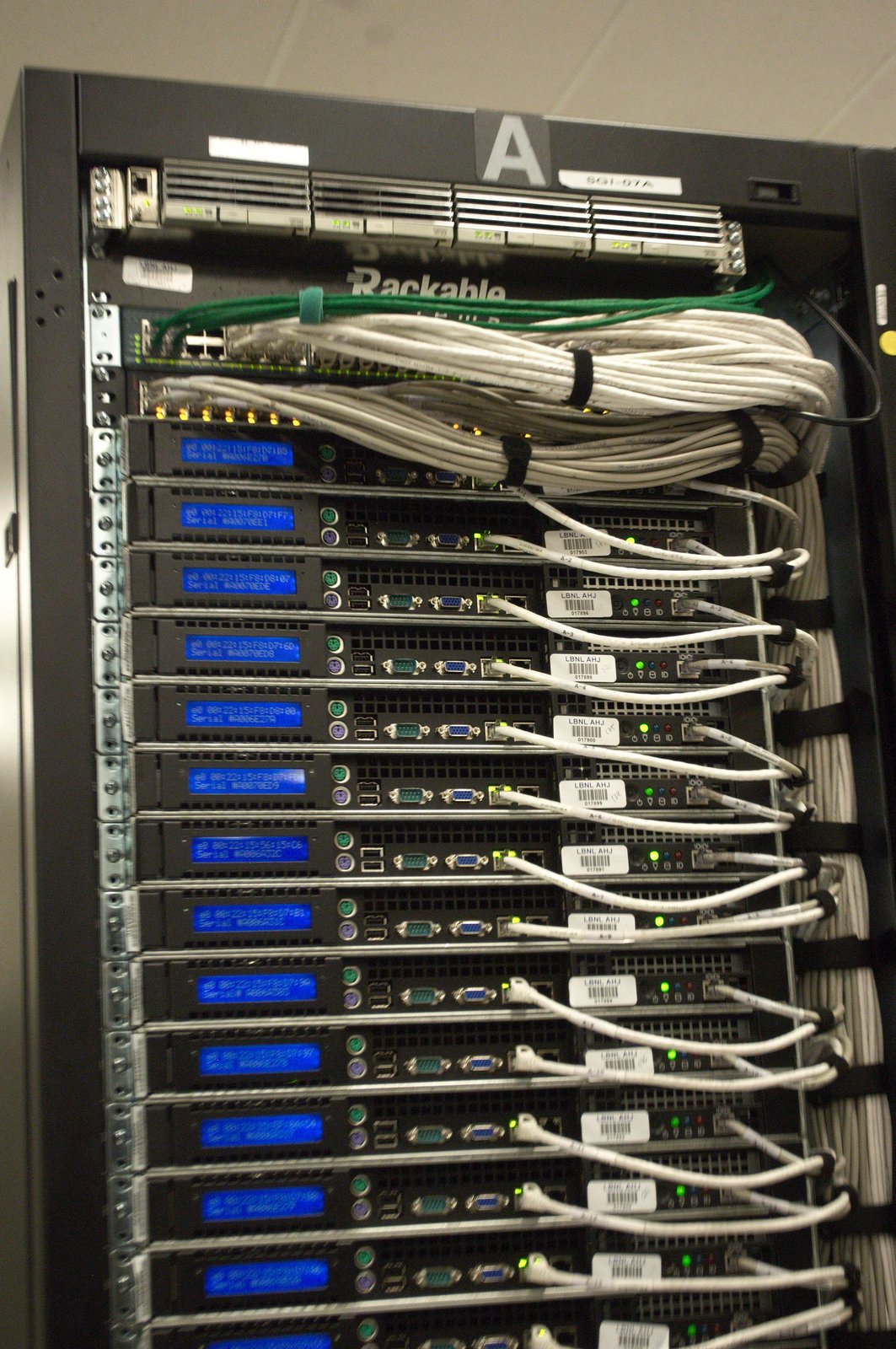
The hook: Wall Street spent Wednesday cheering the midterm map. The smarter read is uglier and more local: voters just pushed back on the buildings that make the AI boom real. Without data centers, a model is a slide deck with a power bill.

Why it matters
- This market has been, more or less, an AI trade. AI needs land, megawatts and permits — and those come from governors and town boards, not from a keynote.
- Voters backed Democratic candidates critical of data centers from Ohio and Michigan to Texas and Georgia, and more than a dozen Ohio towns voted to halt or restrict new projects; similar bans passed in Kansas, Florida and California (WSJ).
- Texas, Georgia and Ohio hold more than 40% of planned U.S. data-center capacity (Evercore ISI via WSJ). If those three slow down, the national build-out slows with them.
By the numbers
- Capacity map: Texas + Georgia + Ohio = more than 40% of planned U.S. data-center capacity (Evercore ISI via WSJ). OpenAI’s Stargate is under construction in Texas; Project Camellia is planned for Georgia; Meta has a large Texas site plus Prometheus in Ohio (WSJ).
- Texas: Governor-elect Gina Hinojosa called the state a “wild west” for data centers and said “It stops when I’m governor,” asking for a pause until the legislature writes new rules (WSJ).
- Wednesday tape: CoreWeave slid nearly 10%; Applied Digital almost 7% (WSJ). CNBC’s read of the same session: CoreWeave around −10% while Microsoft and Amazon each jumped more than 6% — existing capacity got a bid; builders on debt did not.
- Thursday tape (as of 12:24 p.m. ET, not a close): Dow −2.63% (−1,403.66 to 51,952.46), S&P 500 −3.41% (7,426.41), Nasdaq Composite −4.55% (24,564.36) (Reuters). In early trading CoreWeave was down about 12% ($42.57) and Applied Digital about 17% ($13.74) (24/7 Wall St.). The selloff hit the whole AI trade, hyperscalers included.
- Macro weight: AI investment about 1.9% of GDP this year (Goldman Sachs via WSJ) — the biggest growth share for a new industry since 19th-century railroads, in Goldman’s framing. LinkedIn: 750,000 U.S. jobs from 2023 through September tied to AI (via WSJ).
- Build-out at risk: Brad Gerstner on the All-In podcast (via WSJ) puts roughly 25–35% of next year’s U.S. data-center build-out at risk. Separately, UBS (via Reuters, Nov. 5) flags about 30% of expected 2028 U.S. capacity additions — different year, different metric; do not mash them together.
- Anthropic warning: securities filing flagged up to $895.4 billion in future compute spend and said moratoriums could delay or block needed facilities (via WSJ). That is a company projection/risk factor, not cash already spent.
- Politics: SSRS — about 56% of voters said data centers were a crucial or major factor in their Congress picks (via WSJ). Elon Musk poured nearly $500 million into the midterms and posted: “Data centers in space looking pretty appealing right now” (WSJ). Rep. Greg Casar: the revolt was a top 2026 issue and “an early tremor of a much bigger AI earthquake” (WSJ).
- On the ground: Cedar Rapids mayor Tiffany O’Donnell at WSJ Tech — two data centers mean $8 billion in capital investment plus tens of millions in community benefits; her family and dog were threatened; nickname “Tiffany O’Data Center” (WSJ). Associated Builders and Contractors’ Anirban Basu: data centers have been the primary driver of construction-spending growth and the boom is likely to soften over the next couple of years (WSJ).
- Sequoia: partner Pat Grady at the WSJ Tech conference Wednesday — build-out timelines will “elongate”; that is “probably the most tangible impact” of the election (WSJ).
My take
I already covered yesterday’s broad post-election rally elsewhere. This is a different story, and mixing them up is how you lose money politely.
Markets did not kill AI. They started billing for delay. Hyperscalers with cash and shovels in the dirt get a weird gift: scarce existing capacity can look more valuable if new supply is harder to permit. Debt-funded “neocloud” builders feel every slipped month in their cost of capital — Wednesday’s split tape was that message in prices.
What bugs me is not voter skepticism. What bugs me is pitch decks that invent gigawatts without a mayor, a substation queue or a county referendum. AI is still a big bet. The bet now clearly includes zoning.
I’m not asking whether the narrative is alive. I’m asking who already has a permit — and whose permit is still on someone else’s ballot.
What’s next
- Watch governor-elect teams in Texas and other flipped states for the fine print of pauses — especially what is exempt because it is already under construction (CNBC/Nomura: sharper hit may show up in 2028 projects).
- Separate track: a Democratic Congress and AI oversight hearings. That is a Washington risk, not a zoning risk; keep them in different buckets.
- Portfolio hygiene: “AI” is not one ticker. Hyperscalers with capacity and leveraged builders are trading different stories now.
Sources
- WSJ, Will Parker, Anissa Gardizy & Amrith Ramkumar, “The Election Day Revolt That Threatens America’s AI Boom” (11/04/2026 9:00 pm ET)
- Print Magzter headline for the same piece: “Data Centers Draw Voters’ Anger” (11/05/2026)
- Hindustan Times republication (full text used for fact-check)
- CNBC, Jenny Lee (11/05/2026, 5:34 a.m. ET)
- Reuters via Investing.com (11/05/2026)
- AP (11/05/2026)
- Reuters via Yahoo Finance (11/05/2026)
- 24/7 Wall St. (11/05/2026)
- Axios via Benton Daily Digest 11/5/2026 (Maria Curi, “AI earthquake”)
- Wikimedia Commons photo (CC0)
By Sergey Danilov, American Panorama. This is not investment advice.



Leave a Reply